
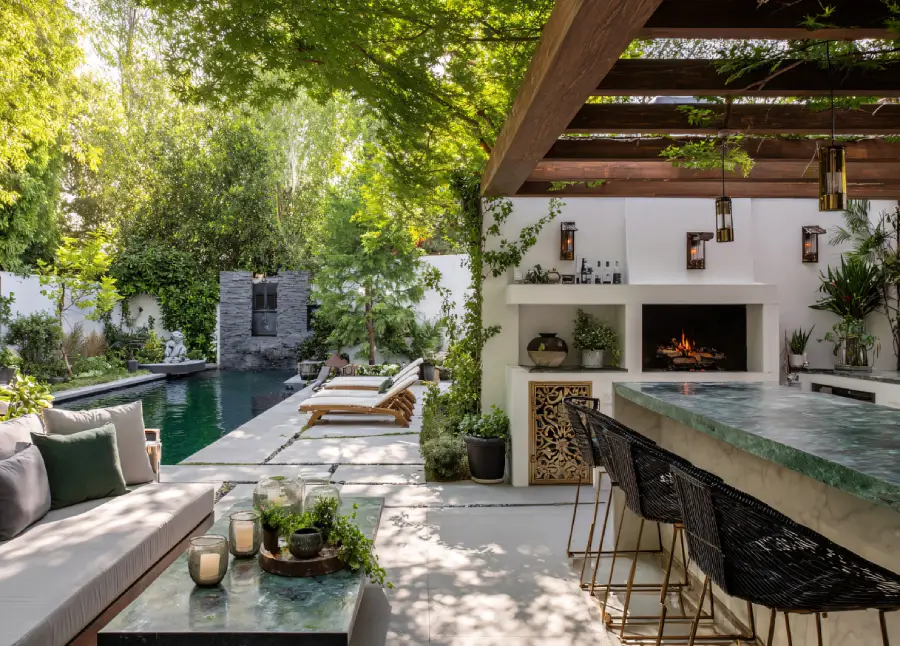
A pool should feel like an invitation, not an ornament.
Yet many homeowners invest in beautifully built pools that slowly become background scenery, used less than expected, enjoyed only on the hottest days. In most cases, the issue isn’t craftsmanship. It’s that the pool was designed as a feature rather than as part of daily life.
In Kansas City, where pool season is finite and valuable, thoughtful design makes all the difference.
Design for Living, Not Just for Looks
The most common mistake we see is starting with shape, size, or finishes before understanding how the space will actually be used. A well-designed pool begins with lifestyle.
Do you imagine relaxed evenings with friends? Quiet afternoons in the sun? Active weekends with kids? Early-morning swims?
Each of those experiences requires different design decisions.
The Five Zones of a Well-Used Pool
Pools that are used consistently tend to share a common structure. They’re organized into clear, comfortable zones:
- A primary swimming area that feels open and balanced
- A shallow ledge or step system for lounging and conversation
- Built-in seating that encourages people to stay in the water longer
- A thoughtful balance of sun and shade
- Subtle, well-placed lighting that allows the space to function after sunset
These elements don’t draw attention to themselves, but together, they shape how the pool is experienced.
Designing for Kansas City Conditions
Local climate matters. In the Midwest, we design pools with attention to:
- Sun exposure and heat management
- Materials that perform well through freeze–thaw cycles
- Seasonal opening and closing considerations
- Privacy in suburban and estate settings
Designing with regional realities in mind ensures longevity and comfort.
Why Planning Comes First
The most successful projects begin with intentional planning, often including layout studies or 3D design, before construction starts. This process reduces surprises, controls cost, and creates a pool that feels natural to use.
A pool that’s designed around how you live becomes part of your routine, not just part of your yard.